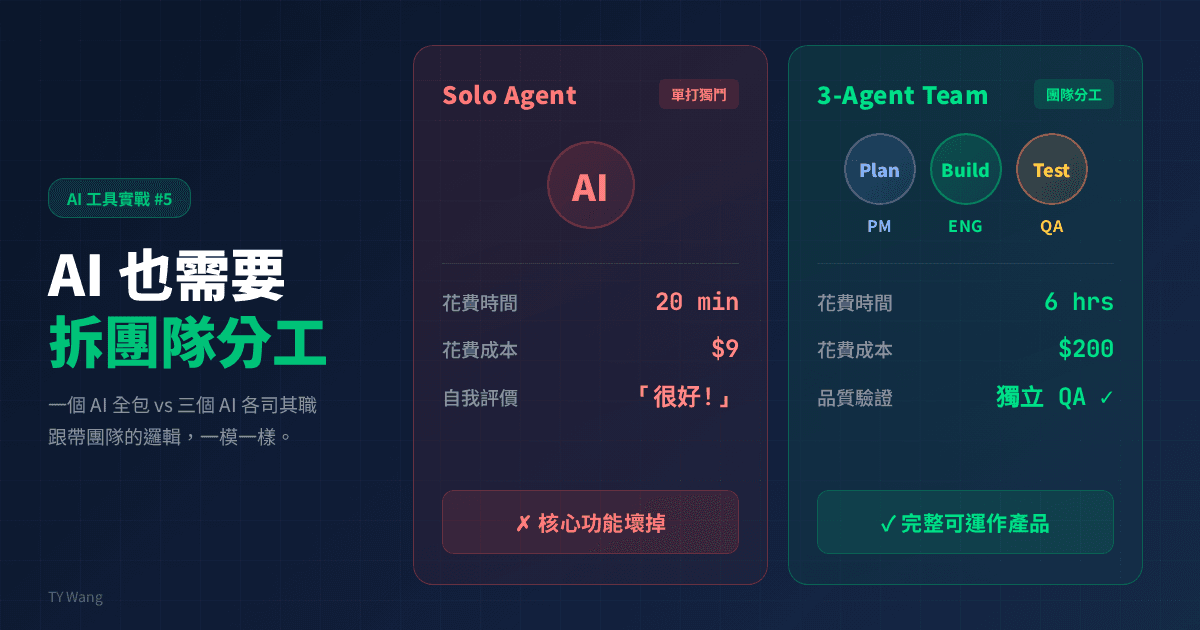
Would you let the same engineer code, test, review, and deploy alone?
Anthropic's new article made me more certain that AI agents also need role separation. A lot of team lessons get repeated almost exactly.
Deep Tech & Advisory
SEA Super-App Tech Advisor
Through a Silicon Valley partner, I contributed to a large Southeast Asian super-app program where the real challenge was reliable delivery under high integration and traffic demands.
Role
Technical Advisor / Enterprise Platform Delivery
Client
Anonymous Southeast Asian super app
Industry
Consumer Platform / Enterprise Architecture
Outcome
Demonstrates large-platform collaboration and enterprise delivery experience without disclosing the client identity.
Case Study Summary
>This case shows how I contribute dense technical judgment inside enterprise platform delivery and cross-team coordination.
>It is especially relevant to CTOs, architecture leads, and platform operators because the focus is execution discipline.
>The core lesson is how to align system complexity, organizational rhythm, and delivery quality at the same time.
Who this case is for
>CTOs, platform architects, and enterprise delivery owners
>Decision makers coordinating technical rhythm across teams
>Engineering leaders focused on execution discipline
Key outcomes
>Helped maintain deliverable architecture in a high-complexity platform environment
>Improved technical clarity and responsibility design across teams
>Moved enterprise delivery closer to a sustainable product pace
Key constraints
>Large-platform problems are often organizational and architectural at the same time
>Cross-team work drifts quickly without clear ownership boundaries
>Enterprise delivery has to optimize for long-term stability, not only short-term speed
Repeatable patterns
>Define ownership and interfaces before debating ideal architecture
>Treat execution discipline as part of product quality
>Use explicit decision logs to reduce cross-team friction
FAQ
market scale
SEA scale
system bar
Enterprise-grade
delivery mode
Cross-team
The hard part of a large consumer platform is rarely the feature itself. It is the system boundaries, the cross-team dependencies, and the stability of delivery. Once the platform is large enough and the integrations are dense enough, the blast radius of every technical decision becomes much wider than in a normal startup product.
These engagements also come with a second constraint: much of the real detail cannot be shared publicly. You still have to execute with discipline even when the public narrative must stay abstract.
My role in this engagement was to support a major Southeast Asian super-app program through a Silicon Valley partner. I was not there to own the whole product. I was there to make the technical boundaries, architecture collaboration, and delivery decisions more stable inside a high-traffic, high-integration environment.
The point of this role was to reduce friction in a large delivery system so that different teams could keep moving under clear interface and ownership rules.
Execution in this kind of environment depends on preserving cadence across multiple stakeholders. The value of architecture judgment is not only designing something theoretically sound. It is making sure the design lines up with sequencing, integration constraints, and accountability in the real delivery process.
Because this work is under NDA, I do not disclose the client identity or system details. Even so, it remains a clear signal of my ability to operate inside enterprise-scale platform constraints.
The public value of this chapter shows up in three ways:
For investors or enterprise buyers, that means I understand not only zero-to-one work but also the realities of enterprise-grade delivery.
Large-platform work is rarely about finding the prettiest technical answer. More often, the real job is to clarify ownership, stabilize interfaces, and prevent complexity from destroying delivery rhythm.
This chapter reinforced something I believe strongly: once systems grow, coordination quality becomes a technical capability in its own right. Engineering leadership is often less about code volume and more about making the organization composable.
Contact
Demonstrates large-platform collaboration and enterprise delivery experience without disclosing the client identity.
Related Writing

Anthropic's new article made me more certain that AI agents also need role separation. A lot of team lessons get repeated almost exactly.

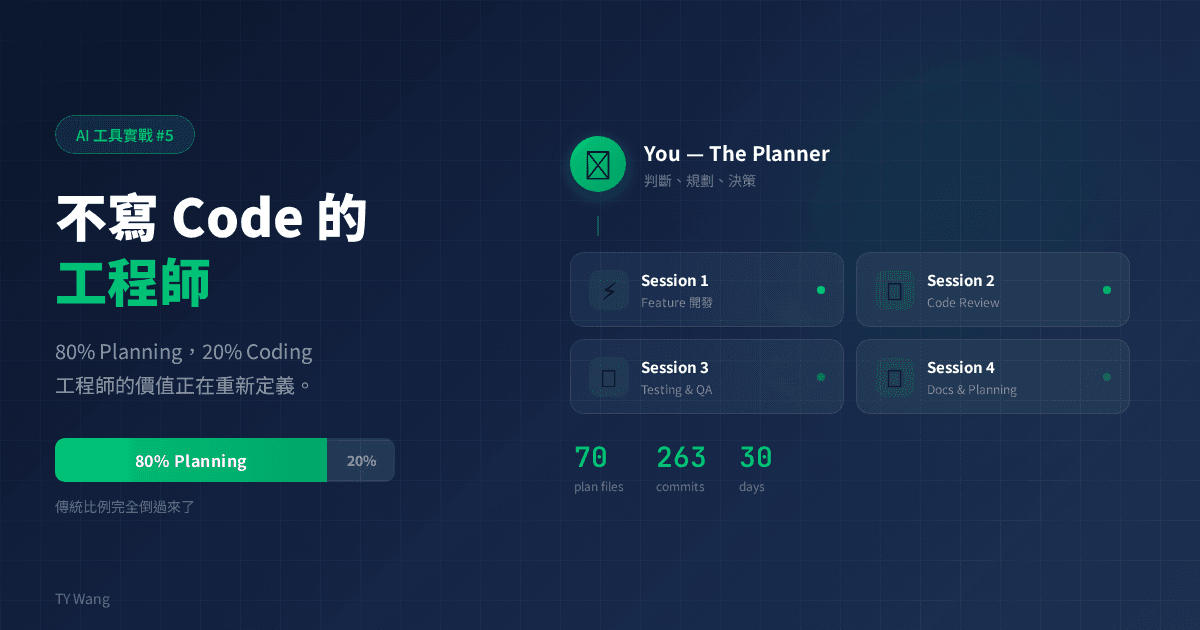
Once AI lowers the cost of execution, the scarcer skill becomes planning, judgment, and knowing what should happen first.

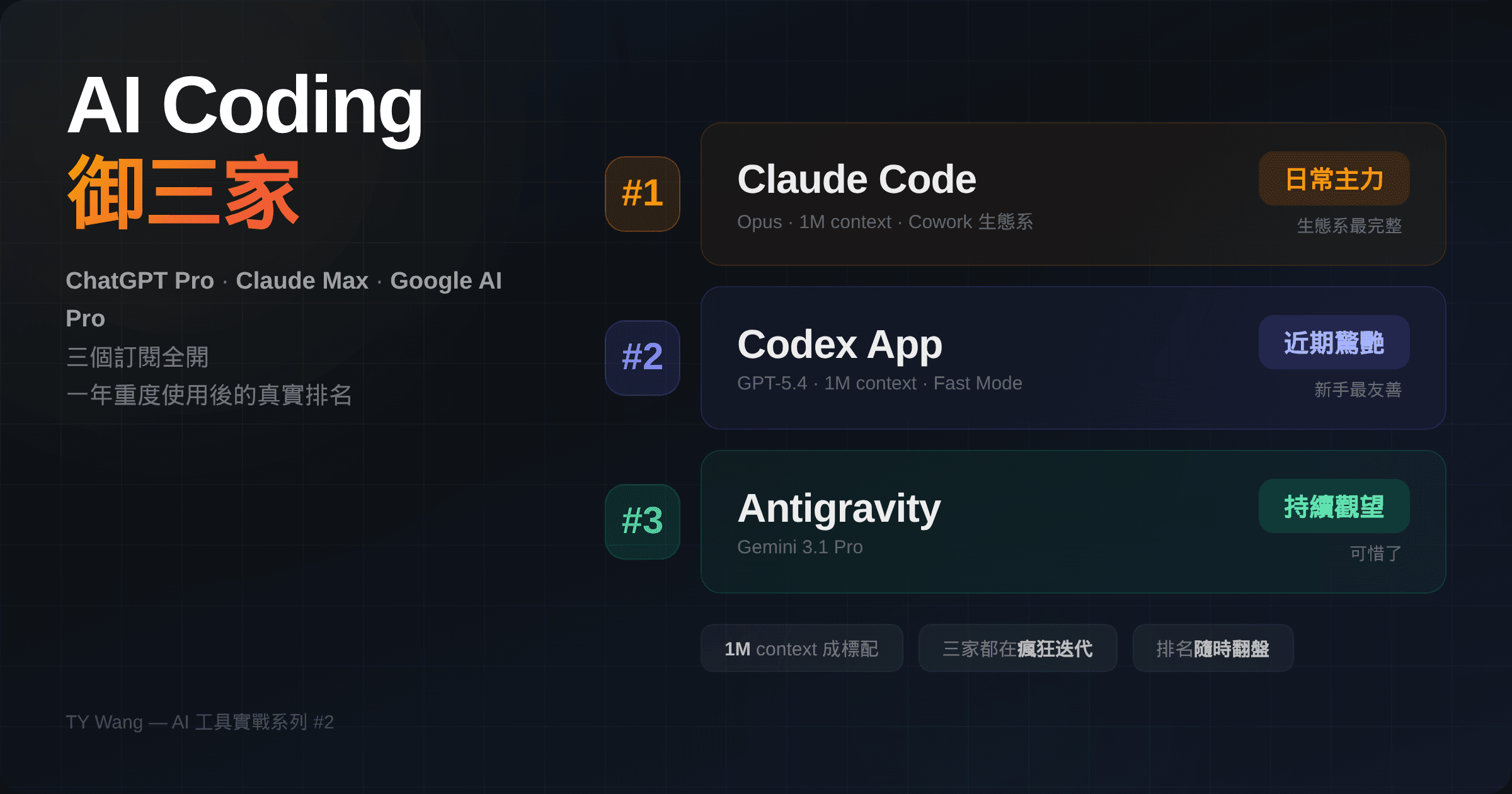
After using ChatGPT Pro, Claude Code Max, and Google AI Pro side by side for over a year, I no longer think of them as interchangeable.